
SHL practice tests are most useful when they train the decision process behind the answer—not when they simply give you another bank of easy aptitude items.
These SHL practice tests contain 25 selected Numerical, Inductive and Verbal Reasoning questions with original ReasoningCampus charts, visual patterns, passages and worked explanations.
The numerical section includes grouped bars, stacked bars, a line chart, colour pie charts and actual-versus-target combo charts. The inductive section uses original visual exercises supplied for ReasoningCampus, while the verbal section focuses on evidence control, True / False / Cannot Say, explicit-versus-implicit information and assumptions.
How These SHL Practice Tests Were Selected and Reviewed
This page is built as an independent SHL practice tests library. Each exercise was chosen because it trains a different decision or error pattern, so you can practise the reasoning process rather than collect more questions for the sake of a larger number.
The selected numerical questions use bar charts, grouped and stacked bars, line charts, pie charts and combo charts. The inductive questions use original visual sequences in which several features can change at once. The verbal exercises use close distractors, scope shifts, qualifier changes and causal traps.
Numerical review
Arithmetic, thresholds, bases, returns, caps and calculation order are recomputed before publication.
Inductive review
The answer must satisfy the complete pattern, not one attractive feature in isolation.
Verbal review
Each answer is checked against what the passage states, implies or leaves unresolved—without importing outside knowledge.
Choose the SHL Practice Tests You Need: Numerical, Inductive or Verbal
SHL Numerical Reasoning Questions
Practise charts, percentages, reverse totals, thresholds, commissions and multi-step calculations.
SHL Inductive Reasoning Questions
Practise movement, count, position, direction, rotation and multi-rule visual sequences.
SHL Verbal Reasoning Questions
Practise evidence, inference, qualifiers, assumptions and True / False / Cannot Say decisions.
SHL Practice Tests: Numerical Reasoning Questions, Charts & Multi-Step Data
These numerical SHL practice tests move from straightforward data reading to multi-step decisions involving bases, thresholds and adjustments. Try each one before opening the solution, then compare your calculation path with the worked method.
| Rules / Notes | |
|---|---|
| Base salary per month | £2,100 |
| Commission rate | 2.4% of combined net sales |
| July adjustment | 3% of July sales are returned before commission |
| Bonus | £500 if combined net sales exceed £700,000 |
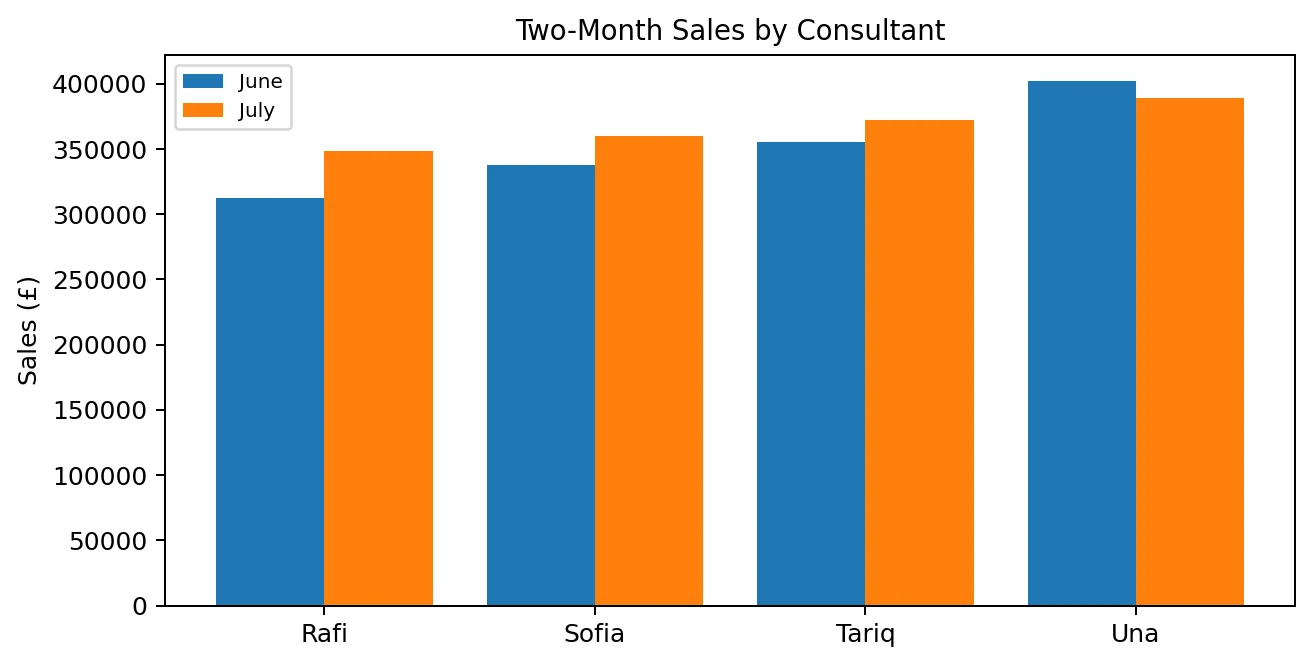
Question. What were Tariq’s total earnings across June and July, rounded to the nearest pound?
| Tariq’s sales | Amount |
|---|---|
| June | £355,000 |
| July, before returns | £372,000 |
View answer & worked solution
- This question is a trap because the commission is based on combined net sales over two months, not on one month in isolation.
- Tariq’s June sales were £355,000 and July sales were £372,000.
- July sales are reduced by 3% returns before commission, so July net sales = £372,000 × 0.97 = £360,840.
- Combined net sales = June £355,000 + July net £360,840 = £715,840.
- Commission = 2.4% of combined net sales = £715,840 × 0.024 = £17,180.16.
- The consultant receives two months of base salary: 2 × £2,100 = £4,200.
- Because combined net sales exceed £700,000, the fixed bonus of £500 is added.
- Total earnings over the two months = £4,200 + £17,180.16 + £500 = £21,880.16, which rounds to £21,880 to the nearest pound.

| Rules / Notes | |
|---|---|
| Adjusted pay includes | Base salary + commission + bonus only |
| Bonus cap for this question | Any bonus above £500 counts as £500 |
| Travel allowance | Ignore it for this question |
Question. Who had the highest adjusted pay under these rules?
| Employee | Base salary | Commission | Bonus |
|---|---|---|---|
| Quinn | £2,550 | £2,200 | £450 |
| Rosa | £2,550 | £2,050 | £600 |
| Stefan | £2,550 | £1,900 | £750 |
| Talia | £2,550 | £2,300 | £500 |
View answer & worked solution
- The trap is that the chart shows four components, but the question asks for adjusted pay under a special rule.
- Adjusted pay includes base salary, commission and bonus only. Travel allowance is ignored, and any bonus above £500 is capped at £500.
- Quinn: adjusted pay = £2,550 + £2,200 + min(£450, £500) = £5,200.
- Rosa: adjusted pay = £2,550 + £2,050 + min(£600, £500) = £5,100.
- Stefan: adjusted pay = £2,550 + £1,900 + min(£750, £500) = £4,950.
- Talia: adjusted pay = £2,550 + £2,300 + min(£500, £500) = £5,350.
- The highest adjusted pay is £5,350, so the correct answer is Talia.
| Rules / Notes | |
|---|---|
| Commission rate | 3% of sales |
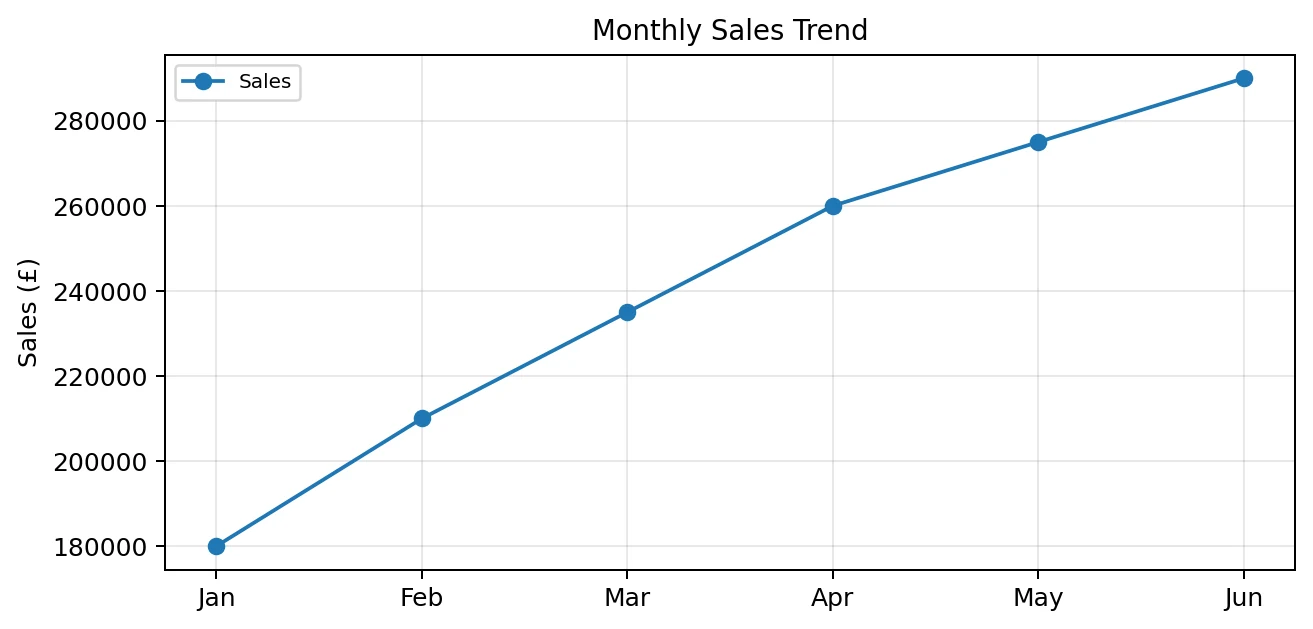
Question. What commission was earned on Quarter 2 sales?
| Month | Sales |
|---|---|
| January | £180,000 |
| February | £210,000 |
| March | £235,000 |
| April | £260,000 |
| May | £275,000 |
| June | £290,000 |
View answer & worked solution
- Quarter 2 includes April, May and June.
- Read the chart: April = £260,000, May = £275,000, June = £290,000.
- Total Q2 sales = £260,000 + £275,000 + £290,000 = £825,000.
- Commission is 3% of Q2 sales, so commission = £825,000 × 0.03 = £24,750.
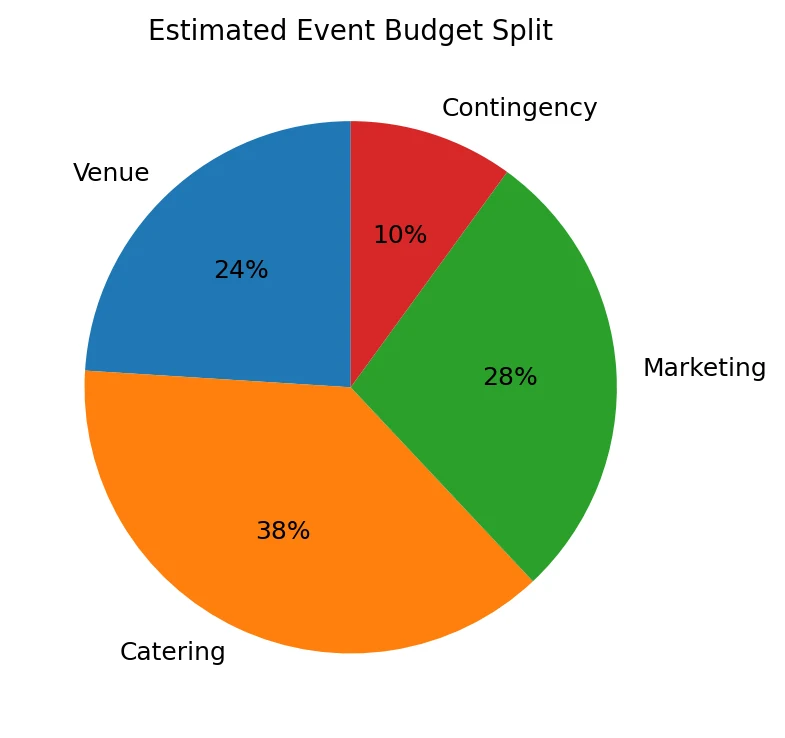
Question. If the Venue slice equals £4,800, what is the total event budget?
| Category | Share |
|---|---|
| Venue | 24% |
| Catering | 38% |
| Marketing | 28% |
| Contingency | 10% |
View answer & worked solution
- Read the pie chart first. Venue represents 24% of the total budget.
- If 24% equals £4,800, then the whole budget equals £4,800 ÷ 0.24.
- Total budget = £20,000.
| Rules / Notes | |
|---|---|
| Administration fee | 4% of the pre-VAT total |
| VAT | 20% added after the fee |
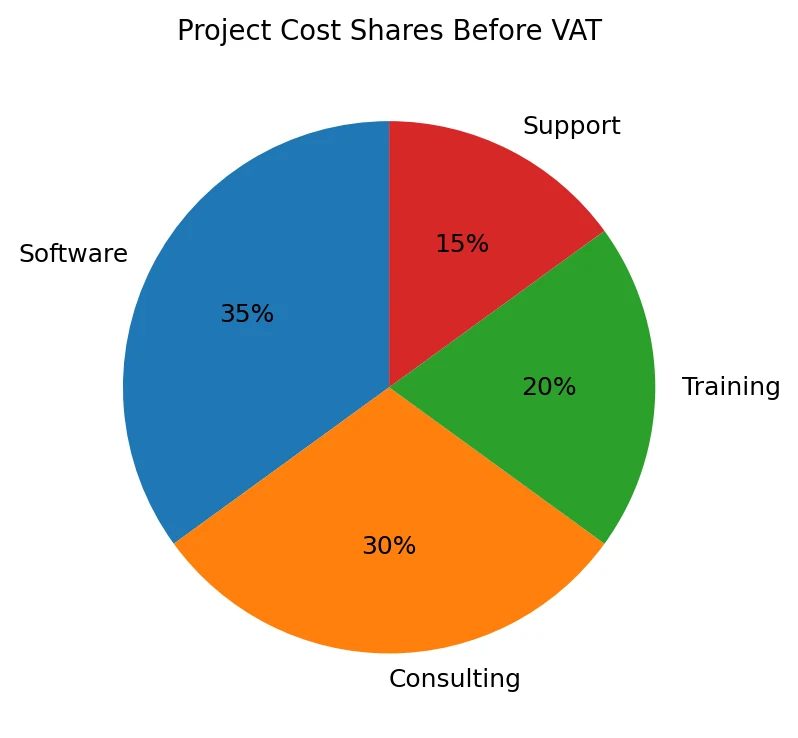
Question. If the Training slice equals £7,600, what is the final gross project cost?
| Category | Share before fee and VAT |
|---|---|
| Software | 35% |
| Consulting | 30% |
| Training | 20% |
| Support | 15% |
View answer & worked solution
- The pie chart gives the split of the pre-VAT project cost.
- Training is 20% of the pre-VAT total. If Training costs £7,600, then the pre-VAT total is £7,600 ÷ 0.20 = £38,000.
- An administration fee of 4% is then added: £38,000 × 0.04 = £1,520.
- Pre-VAT total after the fee = £38,000 + £1,520 = £39,520.
- Finally add 20% VAT: £39,520 × 1.20 = £47,424.00.
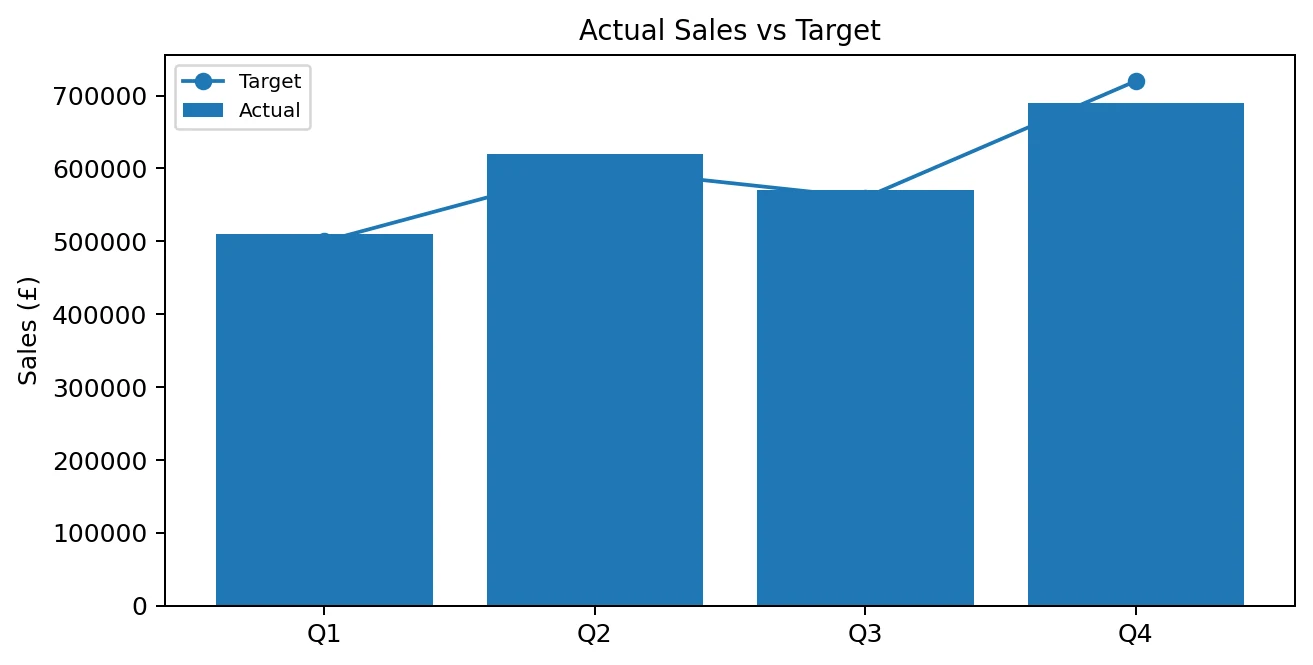
Question. In which quarter did actual sales exceed target by the largest proportion?
| Quarter | Actual sales | Target |
|---|---|---|
| Q1 | £510,000 | £500,000 |
| Q2 | £620,000 | £600,000 |
| Q3 | £570,000 | £560,000 |
| Q4 | £690,000 | £720,000 |
View answer & worked solution
- Proportional over-performance means excess divided by target, not just the raw difference.
- Q1: (£510,000 – £500,000) ÷ £500,000 = 2.0%.
- Q2: (£620,000 – £600,000) ÷ £600,000 = 3.3%.
- Q3: (£570,000 – £560,000) ÷ £560,000 = 1.8%.
- Q4: (£690,000 – £720,000) ÷ £720,000 = -4.2%.
- The largest positive proportion is 3.3%, so the answer is Q2.
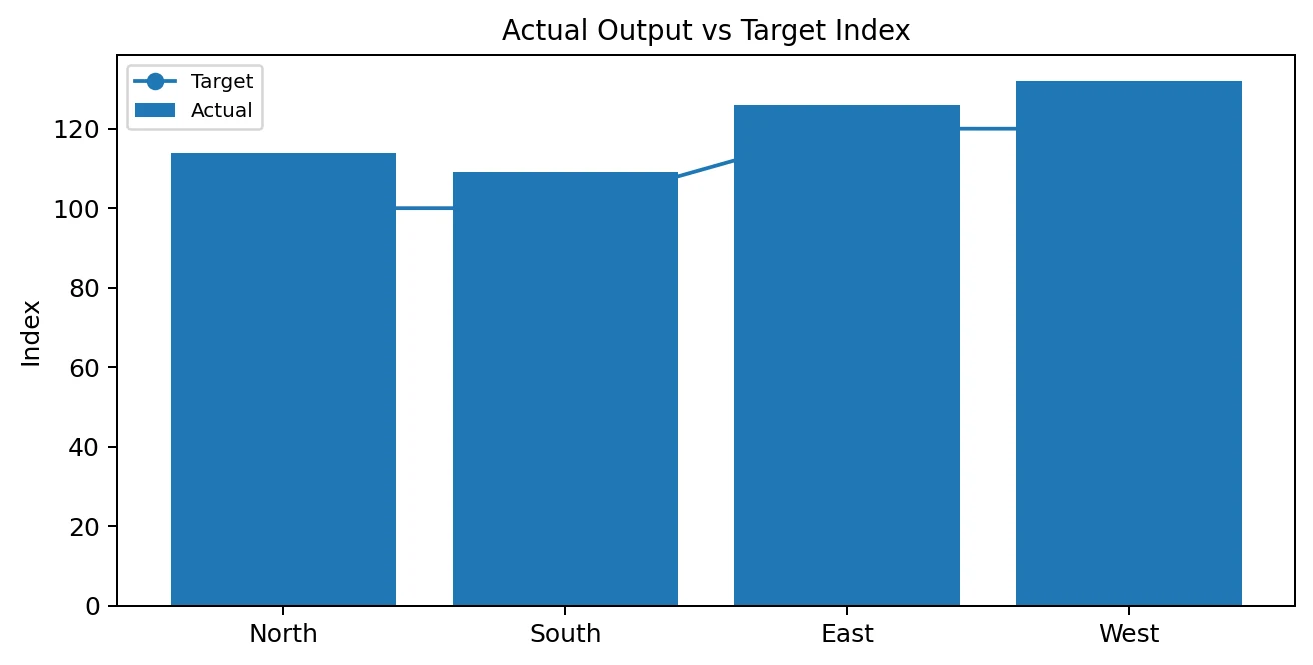
| Rules / Notes | |
|---|---|
| Bonus rule | £750 for each team whose actual output is at least 110% of target |
Question. What is the total bonus pool?
| Team | Actual output | Target |
|---|---|---|
| North | 114 | 100 |
| South | 109 | 100 |
| East | 126 | 120 |
| West | 132 | 120 |
View answer & worked solution
- A team qualifies for the bonus only if actual output reaches at least 110% of target.
- North: target = 100, 110% of target = 110, actual = 114, so it qualifies.
- South: target = 100, 110% of target = 110, actual = 109, so it does not qualify.
- East: target = 120, 110% of target = 132, actual = 126, so it does not qualify.
- West: target = 120, 110% of target = 132, actual = 132, so it qualifies.
- 2 teams qualify, and each qualifying team receives £750.
- Total bonus pool = 2 × £750 = £1,500.

| Rules / Notes | |
|---|---|
| Discount rule | Fees are reduced by 50% |
Question. Under Plan C, if the deposit paid was £17,850, what is the final total after the fee discount? The total price shown already includes fees.
| Plan | Deposit share | Fee share |
|---|---|---|
| A | 20% | 5% |
| B | 25% | 4% |
| C | 15% | 6% |
| D | 30% | 3% |
View answer & worked solution
- For Plan C, the chart shows that the deposit is 15% of the total price and fees are 6% of the total price.
- If the deposit paid was £17,850, then total price before the fee discount is £17,850 ÷ 0.15 = £119,000.
- Fees before discount = 6% of £119,000 = £7,140.
- The question says fees are reduced by 50%, so discounted fees = £7,140 × 0.50 = £3,570.
- Final amount after the fee discount = £119,000 – £7,140 + £3,570 = £115,430.
How to Review These SHL Practice Tests After You Calculate
When reviewing these SHL practice tests, identify whether an error came from chart reading, the calculation base, the order of operations, or a missed condition. That diagnosis is more valuable than simply noting the correct option.
SHL Practice Tests: Inductive Reasoning Visual Patterns
The seven visual exercises below are reproduced from the supplied ReasoningCampus source slides. In these SHL practice tests, the images are intentionally preserved rather than redrawn so that the practice item itself remains unchanged. Use the solution only after you have tested every visible feature across the sequence.

Source exercise preserved as supplied. Greek option labels Α / Β / Γ / Δ / Ε correspond to A / B / C / D / E.
View answer & rule explanation
The dot moves clockwise around the outside: bottom → left → top → right → bottom, so it must next be on the left. The arrow points down for two frames, right for two and then up for two; it alternates inside and outside the square, so the next arrow points up outside the top edge. The triangle appears in even-numbered frames. D combines the left dot, external upward arrow and triangle.
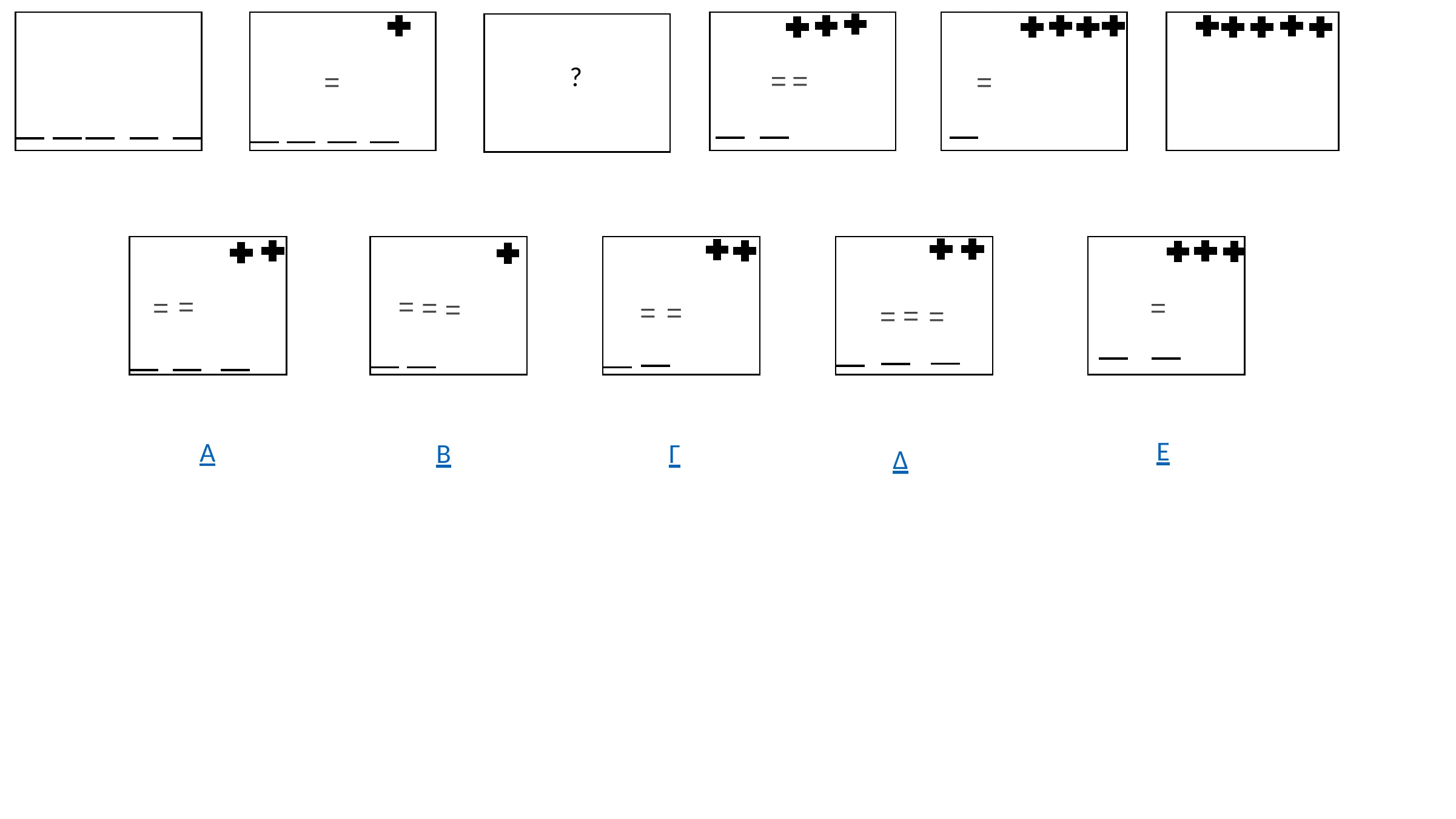
Source exercise preserved as supplied. Greek option labels Α / Β / Γ / Δ / Ε correspond to A / B / C / D / E.
View answer & rule explanation
The plus signs increase 0, 1, 2, 3, 4, 5, while the bottom dashes decrease 5, 4, 3, 2, 1, 0. The equals-sign count is the smaller of those two counts: 0, 1, 2, 2, 1, 0. The missing third panel therefore needs two plus signs, three bottom dashes and two equals signs. Only A has all three counts.
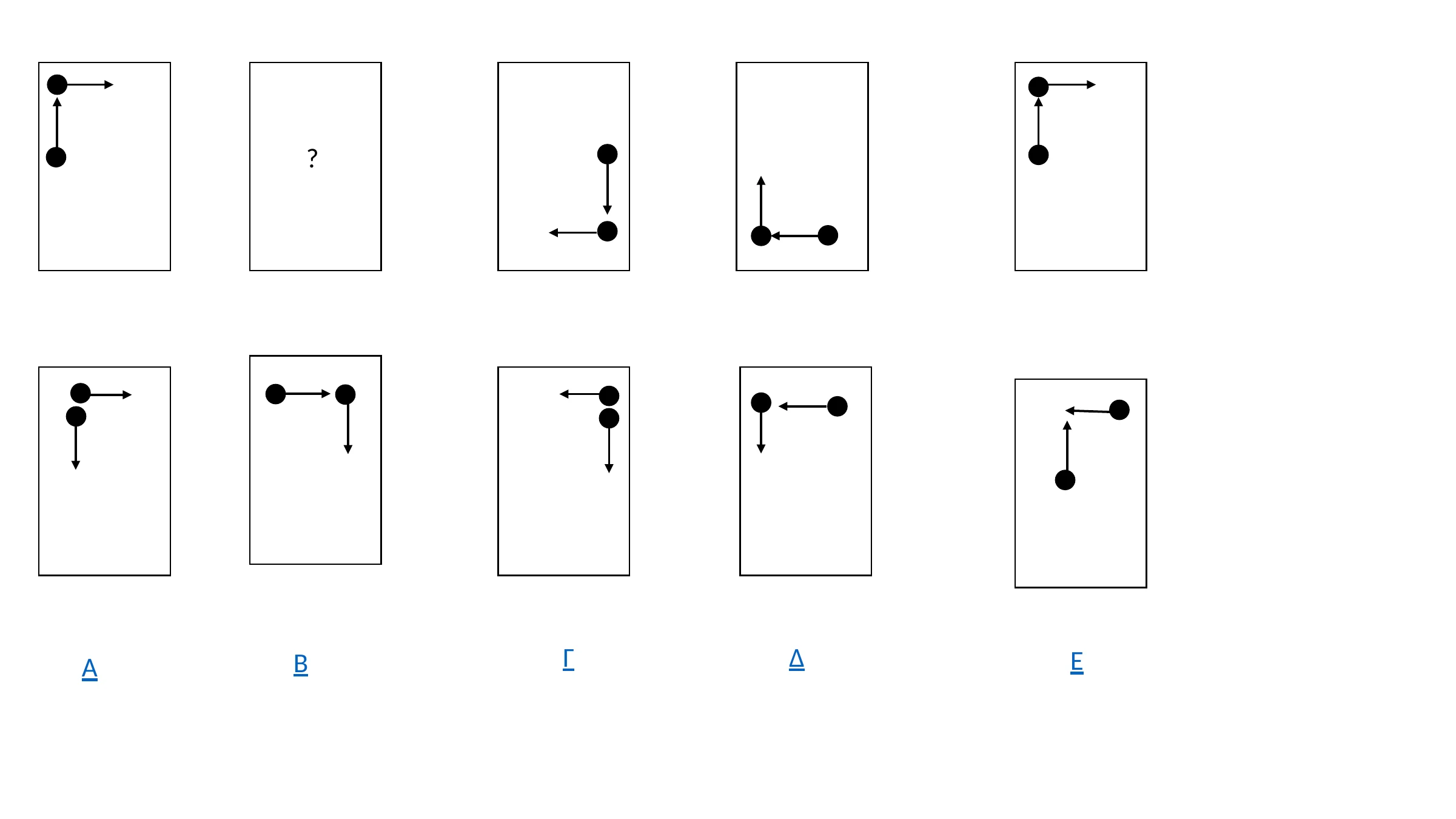
Source exercise preserved as supplied. Greek option labels Α / Β / Γ / Δ / Ε correspond to A / B / C / D / E.
View answer & rule explanation
Rotate the complete two-arrow arrangement 90° clockwise at each step. Frame 1 has an upward arrow followed by a rightward arrow; frame 2 must have a rightward arrow followed by a downward arrow. The black circles remain at the tails of the arrows, including the shared corner. B fits, and rotating it again produces the given third frame.
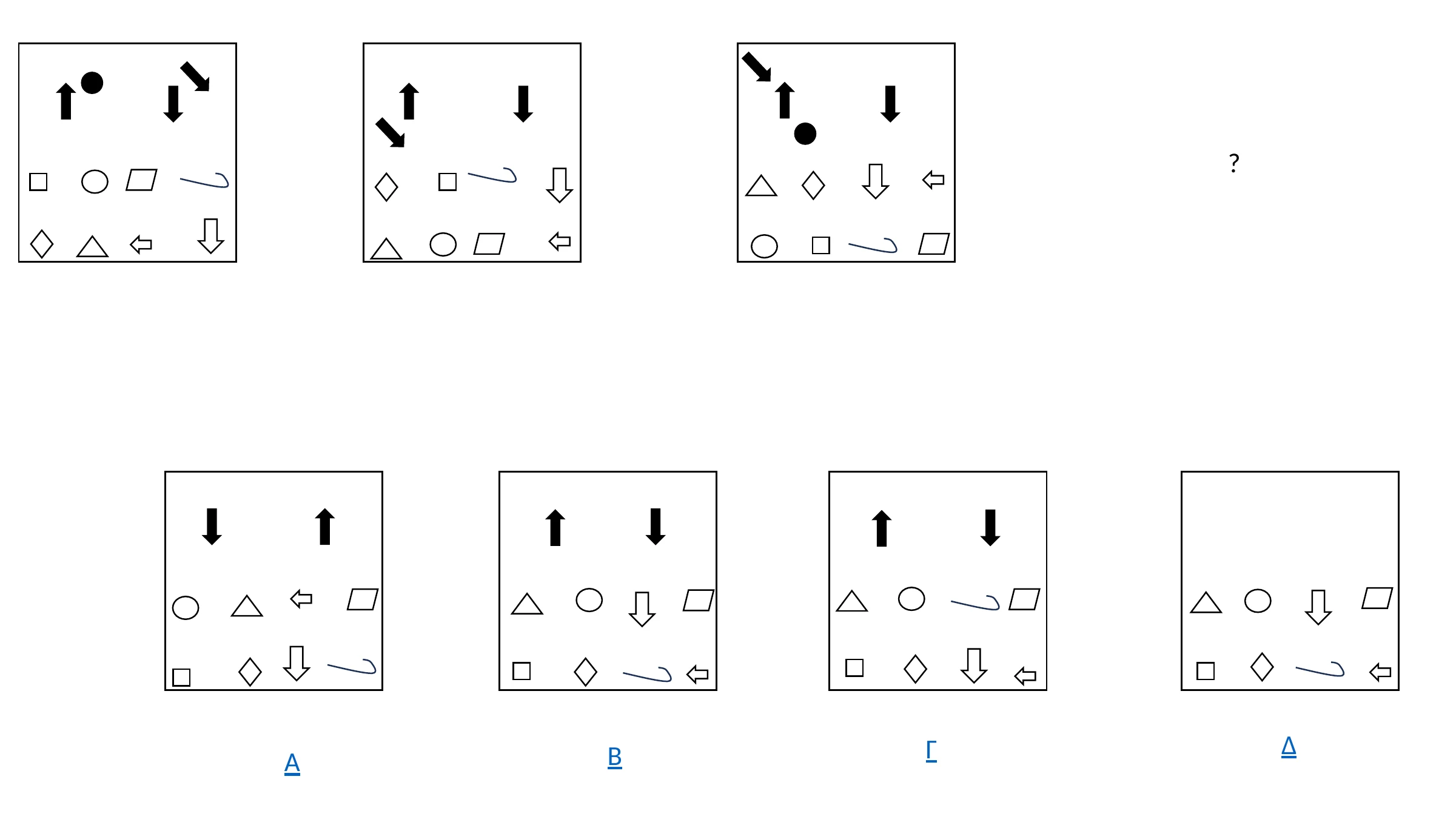
Source exercise preserved as supplied. Greek option labels Α / Β / Γ / Δ / Ε correspond to A / B / C / D / E.
View answer & rule explanation
Read the lower half as two separate 2×2 groups. In the left group, square, circle, diamond and triangle move one place clockwise per frame. The next layout is circle/triangle above square/diamond. In the right group, parallelogram, curved mark, left arrow and down arrow move one place anticlockwise. The next layout is left arrow/parallelogram above down arrow/curved mark. Only A satisfies both groups; the upper marks are not needed to distinguish the answer.
Original ReasoningCampus exercise. Which option completes frame 4?
Read the figures as text
Six frames, with frame 4 missing. Relative to frame 1, the line group rotates clockwise by 0, 90, 180, unknown, 0 and 90 degrees. Before rotation, the plain line occupies the top, middle, bottom, unknown, middle and bottom slots. Options: A 0 degrees/top; B 270 degrees/middle; C 270 degrees/top; D 90 degrees/top.
View answer & rule explanation
- Track the orientation of the complete group. It rotates 90° clockwise on every step: 0°, 90°, 180°, 270°, 0°, 90°.
- To compare line identity, mentally undo each rotation. In that common orientation, the plain line advances top → middle → bottom → top → middle → bottom.
- The missing fourth frame therefore has a 270° clockwise rotation and the first local slot plain. After rotation, this plain line is on the left.
- Option C matches both features. A and D have the wrong orientation; B makes the middle line plain.
Original ReasoningCampus exercise. Which option gives frame 6?
Read the figures as text
Frames 1 to 5: descending diagonal, outline square, top-left dot; rising diagonal, filled square, top-right dot; descending diagonal, outline square, bottom-right dot; rising diagonal, filled square, bottom-left dot; descending diagonal, outline square, top-left dot. Predict frame 6. Options A rising/outline/top-right; B descending/filled/top-right; C rising/filled/bottom-right; D rising/filled/top-left; E rising/filled/top-right.
View answer & rule explanation
- The diagonal alternates descending and rising. After the descending line in frame 5, the next line rises from bottom left to top right.
- The square alternates outline and filled, so the next square is filled.
- The dot moves clockwise: top left → top right → bottom right → bottom left → top left. It must move to top right.
- Only E has a rising diagonal, filled square and top-right dot. A fails fill; B fails direction; C and D fail position.

Source exercise preserved as supplied. Greek option labels Α / Β / Γ / Δ / Ε correspond to A / B / C / D / E.
View answer & rule explanation
Separate odd and even frames. In odd frames 1, 3 and 5, the two filled corner shapes occupy bottom, right and top respectively, moving a quarter-turn anticlockwise within that sub-sequence. In even frames 2 and 4 they occupy left and bottom, so frame 6 needs the right pair filled. The central bar is vertical in odd frames; in even frames its slant alternates descending, rising, descending. C combines a descending central bar with the two right corner shapes filled.
How to Review Visual SHL Practice Tests
Write down the feature that changed—movement, count, position, direction, fill or dependency—and verify the rule across the whole sequence. A pattern that explains only part of the image is not yet a valid rule.
SHL Practice Tests: Verbal Reasoning, Evidence & Inference
Hard verbal questions are often difficult because several options sound professionally written and broadly plausible. The discipline is narrower: identify what the passage actually supports, preserve qualifiers and refuse to turn correlation into causation. The following verbal SHL practice tests are original ReasoningCampus items built around evidence, qualifiers, inference and assumptions.
A metropolitan transport authority introduced a pilot programme in which six bus corridors received signal priority technology and revised dispatch rules. The authority’s internal note reported that average journey times on four of the six corridors fell during the first three months, while two corridors showed no meaningful change.
The same note warned that the trial coincided with school holidays and lighter road works than usual, so the measured effect could not be attributed solely to the new system. Passenger complaints about long waits fell citywide during the quarter, but the note did not state whether this fall was concentrated on the pilot corridors.
A staff appendix added that maintenance costs rose during installation. It also observed that some costs were one-off and would not recur if the system were expanded.
Question. Average journey times improved on every corridor included in the pilot.
View answer & worked solution
The passage says that journey times fell on four of the six corridors and that two showed no meaningful change. That directly contradicts the claim that every corridor improved.
Thinking method: Start by testing whether the statement matches the passage exactly. If even one part is directly contradicted, the answer is False rather than Cannot Say.
Question. The internal note stated that the measured effects of the pilot could be attributed solely to the new signal priority system.
View answer & worked solution
The note explicitly warns that the measured effect could not be attributed solely to the new system. The statement therefore contradicts the note’s caution by turning a qualified finding into a definite single-cause claim.
Thinking method: Watch for causal overreach. A statement becomes false when it turns a limited or uncertain relationship into a definite single cause.
Question. Passenger complaints fell more sharply on the pilot corridors than elsewhere in the city.
View answer & worked solution
The passage says complaints fell citywide, but it also says the note did not state whether that fall was concentrated on the pilot corridors. So the comparison is not established.
Thinking method: When the passage withholds a comparison, do not invent one. If the text gives no basis for deciding between two possibilities, choose Cannot Say.
Question. Some of the extra maintenance costs reported during the pilot may not continue if the programme is rolled out.
View answer & worked solution
The staff appendix states that some costs were one-off and would not recur if the system were expanded. That supports the statement.
Thinking method: Match the statement to the exact evidence before bringing in any outside knowledge.
During a review of district court backlogs, analysts found that hearing postponements rose after several courts shifted to a shared scheduling platform. The review did not claim that the platform caused the increase. It noted instead that the rollout happened in the same quarter as a judicial vacancy spike and a change in evidentiary rules that lengthened some hearings.
However, the analysts also observed that courts using the platform’s conflict-checking function more consistently showed fewer last-minute adjournments than courts that left that function largely unused.
Question. Which statement is explicitly supported by the passage?
View answer & worked solution
The passage states directly that the rollout happened in the same quarter as the vacancy spike and the rule change. The other options either overclaim causation, add an absolute, or invent a reason.
Thinking method: Separate reported facts from reader inference. If the passage says something directly, it is explicit; if it only points in that direction, it remains implicit.
Question. Which of the following is implied, but not directly stated, by the passage?
View answer & worked solution
The passage does not state causation outright, but the comparative observation about courts that used the feature consistently supports a cautious implication that the function may help reduce certain adjournments.
Thinking method: Look for the answer that stays one step below certainty. A valid implication is supported by the passage, but it is not framed as a direct finding.
Question. Which option incorrectly presents an unsupported causal claim as a conclusion of the analysts?
View answer & worked solution
The analysts did not conclude that the platform increased postponements; they expressly avoided that claim. Option D upgrades a possibility into a reported conclusion.
Thinking method: Be alert to options that upgrade caution into conclusion. A common trap is to turn an observed pattern into a stated judgment.
A hospital director argues that non-urgent patient letters should be consolidated into a single weekly dispatch. She says this would reduce printing and mailing costs without materially affecting care, because the letters concern routine confirmations rather than time-critical decisions.
Question. Which assumption does the director’s argument most depend on?
View answer & worked solution
The proposal only works if a short batching delay is genuinely harmless in operational and clinical terms. If that assumption fails, the cost-saving argument weakens at once.
Thinking method: Identify the claim the recommendation cannot live without. The right option is not merely helpful or attractive; it is the premise whose failure would take the whole proposal down.
Question. Which option is a tempting but non-essential assumption?
View answer & worked solution
D is non-essential: patients may read a letter immediately and still receive all necessary information in time. A is needed for the claimed cost saving; B supports the stated timing rationale; C is needed for the claim that care and service will not be materially harmed.
Thinking method: Separate what makes the argument workable from what merely makes it easier to sell. The tempting distractor usually sits close to the reasoning but does not actually carry it.
Question. Which statement, if true, would most weaken the argument?
View answer & worked solution
A directly challenges the claim that batching will not materially affect care: some letters would arrive after a necessary response deadline. B concerns contract flexibility, C concerns a preference, and D reports calls without showing harm caused by delayed dispatch.
Thinking method: Treat each option as true and ask whether it undermines the proposed policy. Do not negate an option when the question asks which new fact weakens the argument.
How to Review Verbal SHL Practice Tests
For every wrong answer, point to the exact phrase in the passage that supports, contradicts or fails to establish the statement. If you cannot locate that evidence, you may be answering from assumption rather than text.
Need Deductive Reasoning Beyond These SHL Practice Tests?
These SHL practice tests deliberately do not insert token deductive examples just to make the category list look complete. If your invitation names Deductive Reasoning—or a mixed assessment that includes deductive reasoning—use the specialist SHL Deductive Reasoning page for ordering, rules, constraints and conclusion questions. For a broader assessment overview, start with the SHL Tests candidate hub.
SHL Practice Tests by Difficulty: When Should You Move Up?
| Level | What you should be able to do | Best practice |
|---|---|---|
| Foundation | Identify the question type and one clear rule. | Single-rule questions with untimed review. |
| Intermediate | Maintain accuracy with two connected steps. | Mixed charts, qualified verbal statements and two-feature patterns. |
| Advanced | Separate relevant from irrelevant information. | Caps, thresholds, close verbal distractors and multi-feature visual rules. |
| Challenge | Stay accurate while time pressure rises. | Combined-trap numerical questions, subtle inference and multi-rule sequences. |
Increase difficulty in your SHL practice tests only after your accuracy becomes stable. Repeating extreme questions while making the same basic error is not advanced practice; it is repeated error.
How to Use SHL Practice Tests Without Memorising Answers
Attempt
Check
Understand
Retry
Time
Review
SHL Practice Tests Work Best as an Error-Diagnosis Loop
Use these SHL practice tests as a repeatable error-diagnosis loop. Attempt: solve without opening the explanation. Check: compare your answer. Understand: identify the exact step or assumption that controlled the item. Retry: solve again from a clean start. Time: only add time pressure after the method is stable. Review: record the reason for each error.
Numerical errors
Wrong denominator, wrong data series, over-calculation, missed threshold, incorrect order of adjustments.
Verbal errors
Unsupported assumption, lost qualifier, causal leap, confusing “not stated” with “false”.
Inductive errors
Pattern illusion, stopping after one feature, missing an alternating rule, failing to validate every frame.
Official SHL Practice First, Then Deeper Independent Practice
Your own invitation and the instructions inside your assessment are the final authority. SHL Candidate Support states that its official SHL practice tests are primarily intended to help candidates become familiar with how assessments work. ReasoningCampus should be used as independent supplementary preparation after you identify the assessment you are actually taking.
More SHL Practice Tests and Guides on ReasoningCampus
Identify your SHL assessment
SHL Tests: candidate hub, assessment types and practice routing
Structured preparation
Complete SHL-style preparation across the main reasoning categories
Mixed free practice
Sources, Authorship & Review Method
The factual guidance on official practice resources is checked against SHL Candidate Support. The SHL practice tests on this page come from ReasoningCampus educational workbooks and visual practice materials supplied for publication. Numerical answers are reviewed by recomputing the arithmetic and conditions; verbal answers are checked against the passage evidence; inductive answers are checked against the complete visual rule.
Last substantive review: 23 August 2026. ReasoningCampus is an independent educational preparation platform and is not affiliated with SHL. SHL is a trademark of its respective owner.
SHL Practice Tests: Build Accuracy First, Then Speed
The strongest use of these SHL practice tests is diagnostic. If a pie-chart problem exposes a reverse-percentage weakness, practise that operation. If a verbal answer fails because you imported an assumption, train evidence control.
Across these SHL practice tests, if an inductive sequence defeats you because you tracked only movement and missed colour or count, separate those variables on the next attempt. Improvement comes from correcting the mechanism behind the error—not from collecting answers.
